Cab and Chassis vs. Complete Trucks: What’s Actually Different?


Cab and chassis configurations give you a drivable platform you can fit with the body or equipment your operation needs. Complete trucks already have their intended working body installed.
The right choice depends on more than the initial purchase price. Body requirements, upfitting, deployment time, chassis specifications, and total project cost can all affect which option makes the most sense for your operation.
Note: Terminology can vary between manufacturers, dealers, and listing platforms. Always verify exactly what equipment and configuration an individual listing includes.
Cab and Chassis vs. Complete Trucks: The Difference in One Minute
A cab-and-chassis truck is a drivable chassis-and-cab configuration designed to receive a body or vocational equipment. The buyer adds the working body later based on the application.
A complete truck, by contrast, already has its intended working body or vocational configuration installed.
In simple terms, the decision is between greater configuration flexibility and a truck that is closer to being ready for service.
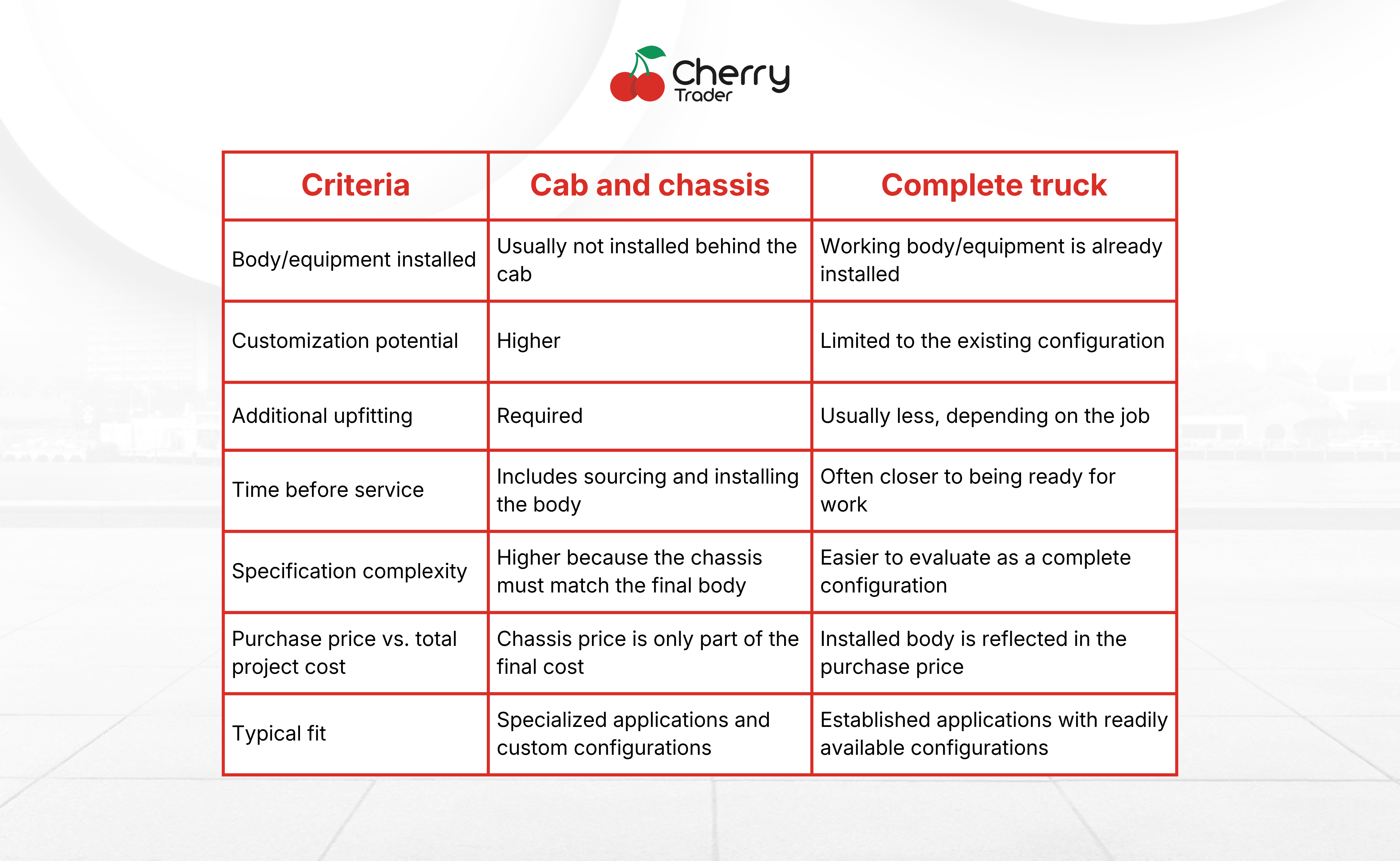
Note: Neither option is automatically better. A fleet that needs a highly specific service body may benefit from starting with a chassis, while a contractor who needs a dump truck quickly may be better served by an already configured vehicle.
What Is a Cab and Chassis Truck?
A cab-and-chassis truck is a truck platform designed to receive a body or specialized equipment after you purchase the chassis.
For example, a service company may need a utility body with storage compartments and specialized equipment.
A construction company may want a dump body, while another operation may require a flatbed with a particular length or loading setup.
You can also install tow and recovery equipment on an appropriate chassis.
The advantage is control over the final configuration. Instead of adapting an existing truck to the job, the buyer can select a body that fits the way the truck will actually be used.
If you already know you need this type of configuration, you can explore cab-and-chassis trucks for sale on Cherry Trader and compare available specifications.
What Is a Complete Truck?
A complete truck is offered with its intended working body or vocational configuration already installed.
Common examples include box trucks, dump trucks, and flatbed trucks. Instead of purchasing a chassis and arranging a separate body installation, the buyer can evaluate the truck with its working configuration already in place.
For example, a business looking for a standard delivery configuration can compare available box trucks for sale.
A construction operation may instead be looking for dump trucks for sale, while a company handling varied or oversized loads may prefer flatbed trucks for sale.
However, "complete" does not mean that the truck automatically includes every accessory or feature your business needs. You still need to review the listing specification and determine whether the installed body, equipment, capacity, and overall condition fit your application.
Cab and Chassis vs. Complete Trucks: Side-by-Side Comparison
The best way to decide is to compare both options using the same practical criteria.
Customization and Body Choice
Cab-and-chassis configurations generally give buyers more control over the final vocational body. The tradeoff is that customization creates additional decisions and coordination.
With a complete truck, much of that work has already been done. The tradeoff is less control over the configuration because you're generally choosing from what is already installed.
Time to Put the Truck Into Service
A complete truck can generally be closer to operational readiness because its working body is already installed.
A cab-and-chassis purchase may involve finding the right body, confirming compatibility, arranging transportation, scheduling an upfit, and completing the installation.
Purchase Price vs. Total Project Cost
With a cab-and-chassis purchase, the final project cost may also include the body, installation or upfitting, transportation between suppliers, accessories, modifications, and other related expenses.
The truck may also incur operational costs if it cannot generate revenue until the upfit is finished.
A complete truck already includes its working body, which can make the overall acquisition cost easier to evaluate. That doesn't mean it will always be less expensive, though. The truck's condition, specifications, and any additional work it needs still matter.
What Should You Check Before Buying Either Type?
Whether you choose a chassis or a complete truck, start with the job the vehicle needs to perform. Then review the specifications and costs that determine whether the truck can handle that job.
For cab-and-chassis buyers, confirm technical compatibility with the manufacturer, a qualified dealer, or a body upfitter whenever there is uncertainty.
For additional buying considerations, Cherry Trader's commercial truck buyer's guide can help you work through the broader purchasing process.
How to Choose Between Cab and Chassis and a Complete Truck
The decision comes down to how much control you need over the truck's final configuration and how quickly you need it ready to work.
Choose Cab and Chassis When
The job requires a specific body or equipment configuration, and you're prepared to manage the upfit process.
This is particularly useful when customization provides a clear operational advantage.
Choose a Complete Truck When
An existing configuration already fits the job and simplicity, availability, or faster operational readiness is more valuable than customization.
Once you know which configuration fits your operation, you can compare available trucks for sale on Cherry Trader and narrow your options by truck type and specifications.

Get the Latest Blog Updates
Subscribe to receive new articles, guides, and industry insights from Cherry Trader directly in your inbox. Stay ahead with the latest trends and tips for buying, selling, and managing equipment.