Truck, Trailer, and Heavy Equipment Insurance Explained


Protect your assets with our comprehensive guide to truck, trailer, and heavy equipment insurance. Browse listings, buy, and protect your newly bought equipment.
Understanding insurance policies is vital to ensure you have adequate coverage. In this article, we’ll explain the types of coverage available, tips for lowering the cost, and much more.
Understanding Truck, Trailer, and Heavy Equipment Insurance
Trucks, trailers, and heavy equipment are the backbone of your operations and require a significant investment. Insurance for these commercial vehicles helps safeguard your investments against a range of risks, including accidents, theft, and damage. This coverage ensures that your business can continue to operate smoothly, even when unexpected events occur. Without proper coverage, even a single incident can result in expensive repairs, legal liabilities, or even threaten the stability of a trucking business.
Different types of equipment have distinct coverage needs, and, as such, insurance policies for different commercial vehicles can differ. For instance, the insurance needs of a construction company with excavators and bulldozers will differ significantly from a logistics company with a fleet of semi-trucks and trailers, such as the Kenworth T680 or Freightliner Cascadia. Coverage requirements may also vary depending on federal regulations and the expectations set by shippers or brokers.

Importance of Insurance for Commercial Vehicles
It’s often the case that commercial vehicles are legally required to be insured. Most jurisdictions mandate that commercial vehicles carry a minimum level of liability insurance. This coverage ensures that, in the event of an accident, there are sufficient funds to compensate third parties for injuries or property damage. Failing to comply with these legal requirements can result in hefty fines, legal penalties, and even the suspension of your business license.
Types of Coverage Available
When it comes to truck, trailer, and heavy equipment insurance, there are several types of coverage available, each designed to address specific risks and needs. Whether you're operating popular models like the Volvo VNL or the Peterbilt 579, understanding these different coverage options will help you make an informed decision about the protection your business requires.
- Liability insurance - This coverage protects your business from financial liabilities arising from third-party claims related to bodily injury or property damage caused by your vehicles or equipment. Liability insurance is often divided into two categories: bodily injury liability and property damage liability.
- Physical damage insurance - This coverage includes collision and comprehensive coverage. Collision insurance covers the cost of repairs or replacement if your vehicle or equipment is damaged in an accident, while comprehensive insurance protects against non-collision-related incidents such as theft, fire, vandalism, and natural disasters.
- Motor truck cargo insurance - This type of insurance covers the goods or materials transported by your vehicles, ensuring you are protected against financial loss if the cargo is damaged or lost. Many brokers and shippers require proof of cargo insurance before allowing drivers to haul loads, and coverage limits may vary depending on the type of freight being transported.
- Non-trucking liability insurance - also known as bobtail insurance - Covers a truck when it’s being driven without a trailer or outside of dispatch. This protection helps fill gaps when the truck is used for personal or non-business purposes.
- Trailer interchange insurance - This insurance covers trailers that the driver doesn’t own but hauls under a trailer interchange agreement. It protects the trailer from damage and is often required when pulling equipment owned by shippers or brokers.
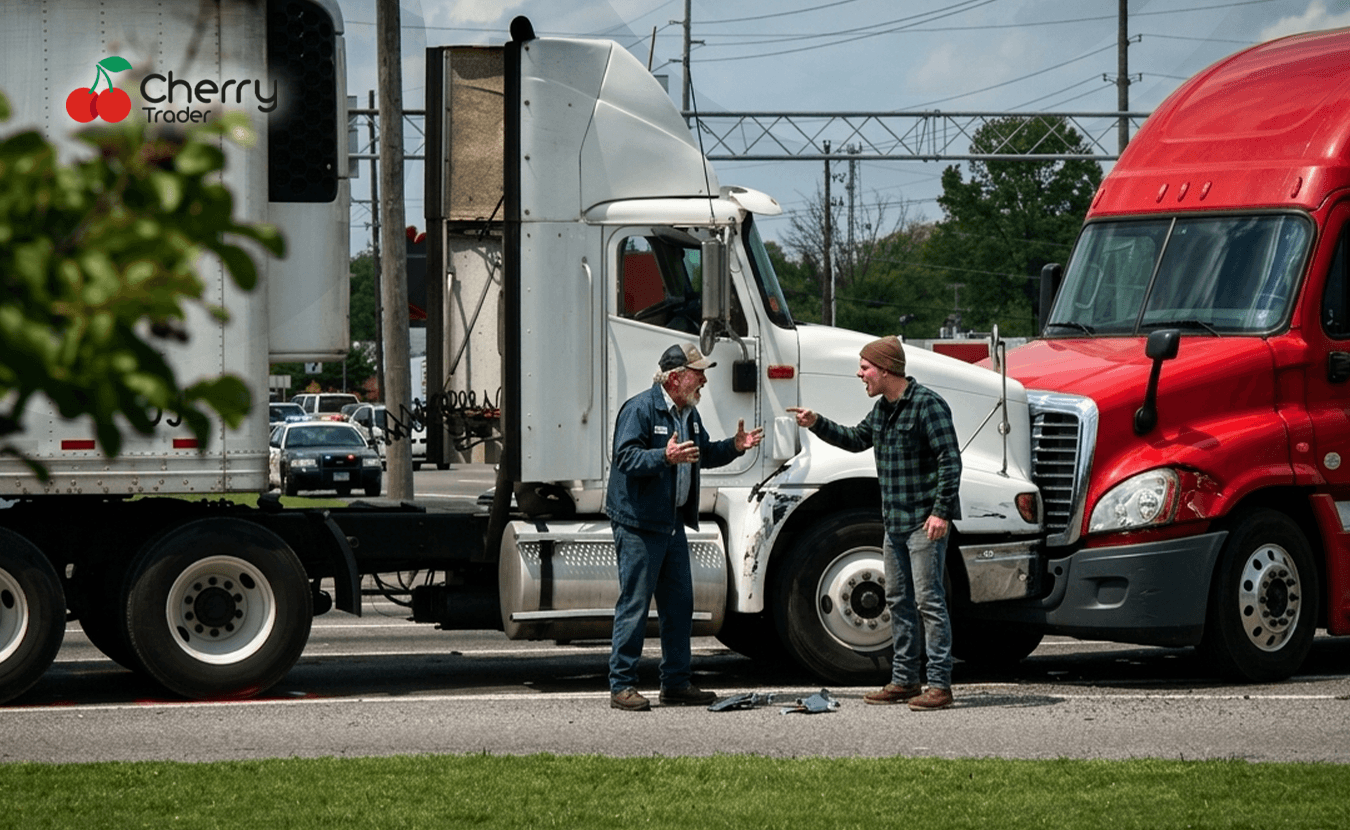
Factors Affecting Insurance Premiums
Several factors can influence the cost of your truck, trailer, and heavy equipment insurance premiums.
One of the primary factors affecting insurance premiums is the type and value of the equipment being insured. Another significant factor is the usage and operation of the equipment. Insurance companies will consider how frequently the equipment is used, the type of work it performs, and the operating environment. Similarly, the operators' driving records and experience can affect premiums. The location of your business and the areas in which your equipment operates can also affect insurance premiums. Insurance companies assess the risk associated with the location and adjust the premiums accordingly.
Higher cost premiums:
- High-value equipment or vehicles with specialized functions typically cost more to insure due to the higher potential payout in the event of a claim. Additionally, the age and condition of the equipment play a role in determining premiums.
- Equipment used in high-risk industries or challenging terrains may attract higher premiums due to the increased likelihood of accidents or damage.
- Regions with higher rates of theft, vandalism, or severe weather events may result in higher premiums.
Lower cost premiums:
- Newer, well-maintained equipment may qualify for lower premiums because it is less likely to experience mechanical failures or breakdowns.
- Businesses with a history of safe operations and experienced drivers are likely to benefit from lower insurance costs.
By understanding these factors and implementing risk management strategies, you can potentially lower your insurance costs and ensure you are getting the best possible coverage for your needs.
Common Exclusions
One common exclusion in heavy equipment insurance is wear and tear. Insurance policies typically do not cover the gradual deterioration of equipment due to regular use and aging. This exclusion means that routine maintenance and repairs resulting from normal wear and tear are the responsibility of the equipment owner.
Another exclusion to be aware of is damage caused by improper use or negligence. If an operator uses the equipment in a manner that is not in accordance with the manufacturer’s guidelines, or if the equipment is not properly maintained, resulting damage may not be covered by the insurance policy.
Some policies may not cover damage caused by earthquakes, floods, or other natural disasters unless specific endorsements are added to the policy. Similarly, intentional damage or fraudulent acts by the insured or their employees are typically excluded from coverage.
Carefully review your policy and discuss any potential exclusions with your insurance provider to ensure you have a comprehensive understanding of your coverage and can address any gaps.
Tips for Lowering Your Insurance Costs
One effective way to reduce insurance costs is by including regular maintenance and inspections of your equipment. Well-maintained equipment is less likely to experience breakdowns or accidents, which can lead to lower premiums. Additionally, investing in safety training for your operators can reduce the likelihood of accidents and claims, resulting in further cost savings.
Another strategy is to consider increasing your deductibles. The deductible is the amount you are responsible for paying out of pocket before your insurance coverage kicks in. By opting for a higher deductible, you can lower your insurance premiums.
Comparing quotes from multiple insurance providers can also help you find the best rates. Different providers may offer varying levels of coverage and pricing.
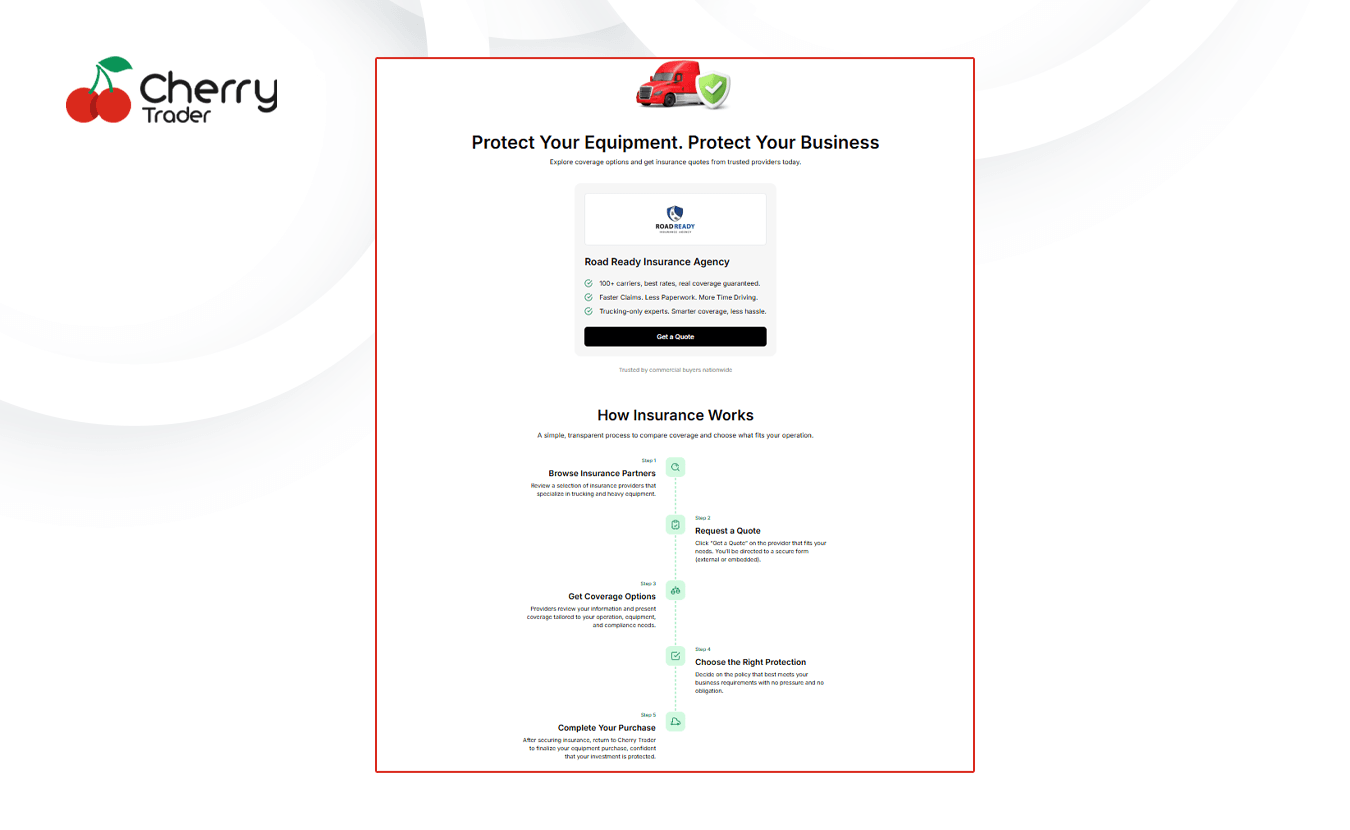
Inside Tip: On Cherry Trader, you can get an insurance quote directly from listings through Road Ready Insurance Agency, a provider specializing in trucking and commercial vehicle coverage. More providers will be available soon, allowing you to easily compare options.
Claims Process: What to Expect
The first step in the claims process is to report the incident to your insurance provider as soon as possible. This can typically be done through the provider’s claims hotline, online portal, or mobile app. When reporting the claim, provide detailed information about the incident, including the date, time, location, and a description of what happened. If there were any witnesses, their contact information should also be included. Prompt reporting is crucial, as delays can complicate the claims process and potentially impact the outcome.
Once the claim is reported, the insurance provider will assign a claims adjuster to investigate the incident. The adjuster will review the claim details, assess the damage, and determine the extent of coverage. They may request additional documentation, such as photographs of the damage, repair estimates, and, if applicable, police reports. Cooperation with the adjuster and providing the requested information promptly can help expedite the claims process.
After the investigation is complete, the insurance provider will determine the claim payout amount based on the policy’s terms and coverage limits. If the claim is approved, the provider will issue the payment for the covered losses. In some cases, the provider may coordinate directly with repair shops or service providers to facilitate repairs or replacements.
FAQ
What is covered under heavy equipment insurance?
Heavy equipment insurance typically covers a range of risks, including physical damage to the equipment, theft, vandalism, and damage caused by accidents. It may also include liability coverage for third-party injuries or property damage resulting from the operation of the equipment. Additional coverages, such as rental reimbursement and cargo insurance, may be available depending on the policy and provider.
Is heavy equipment insurance mandatory?
While heavy equipment insurance is not always legally required, it is highly recommended to protect your valuable assets and mitigate financial risks. Some jurisdictions or contracts may mandate certain levels of insurance coverage, particularly for liability. It is essential to check local regulations and contractual requirements to ensure compliance.
How can I lower my heavy equipment insurance premiums?
There are several ways to lower your heavy equipment insurance premiums, including implementing a risk management program, investing in operator safety training, increasing deductibles, and comparing quotes. Additionally, inquire about available discounts and incentives from your insurance provider.
What factors affect the cost of heavy equipment insurance?
The cost of heavy equipment insurance is influenced by several factors, including the type and value of the equipment, its age and condition, usage and operation, location, and operators' driving records and experience. Insurance providers assess these factors to determine the level of risk and calculate premiums accordingly.
How do I file a claim for heavy equipment insurance?
To file a claim, report the incident to your insurance provider as soon as possible and provide detailed information. The provider will assign a claims adjuster to investigate the claim and determine the extent of coverage. Cooperating with the adjuster and promptly providing the requested documentation can help expedite the claims process.
What are common exclusions in heavy equipment insurance?
Common exclusions in heavy equipment insurance include wear and tear, damage caused by improper use or negligence, and certain types of damage or events, such as earthquakes or floods, unless specific endorsements are added to the policy.
Conclusion: Ensuring Your Assets Are Protected
By understanding the different types of coverage available, the factors affecting premiums, and the common exclusions, you can make informed decisions about your insurance needs.
In the ever-evolving landscape of commercial transportation and construction, risks are inevitable. However, with the right insurance coverage, you can mitigate these risks and protect your investments.
Remember, insurance is not just about compliance or meeting legal requirements; it is about securing your business's future. Take the time to evaluate your insurance needs, explore your options, and choose the coverage that best aligns with your business goals.

Get the Latest Blog Updates
Subscribe to receive new articles, guides, and industry insights from Cherry Trader directly in your inbox. Stay ahead with the latest trends and tips for buying, selling, and managing equipment.