Hi-Rail Trucks: What to Check Before You Rent or Buy One



A hi-rail truck is more than a commercial truck with specialized equipment attached. A hi-rail truck is designed to operate on both roads and railroad tracks, so buyers and renters need to evaluate the vehicle and its rail equipment as a package.
If you are searching for a hi-rail truck, the right unit isn't necessarily the newest or cheapest. It is the one that meets your job's demands, has the right rail equipment, and comes with documentation to support its condition and use.
What Makes a Hi-Rail Truck Different From a Regular Truck?
A road-rail vehicle is a road-going vehicle equipped with specialized rail gear that allows it to travel on railroad tracks.
That creates two inspection priorities:
- Evaluate the underlying truck, including its chassis, engine, transmission, brakes, steering, suspension, tires, electrical systems, and maintenance history.
- Evaluate the rail system itself, including the rail wheels, mounting points, deployment mechanisms, controls, hydraulics, alignment, gauge, and related safety equipment.
A standard used-truck inspection isn't enough. The rail equipment needs its own inspection, documentation review, and, where required, qualified measurement or testing.
Start With the Job the Truck Actually Needs to Do
Before comparing make, model, age, mileage, or price, define what the vehicle needs to accomplish.
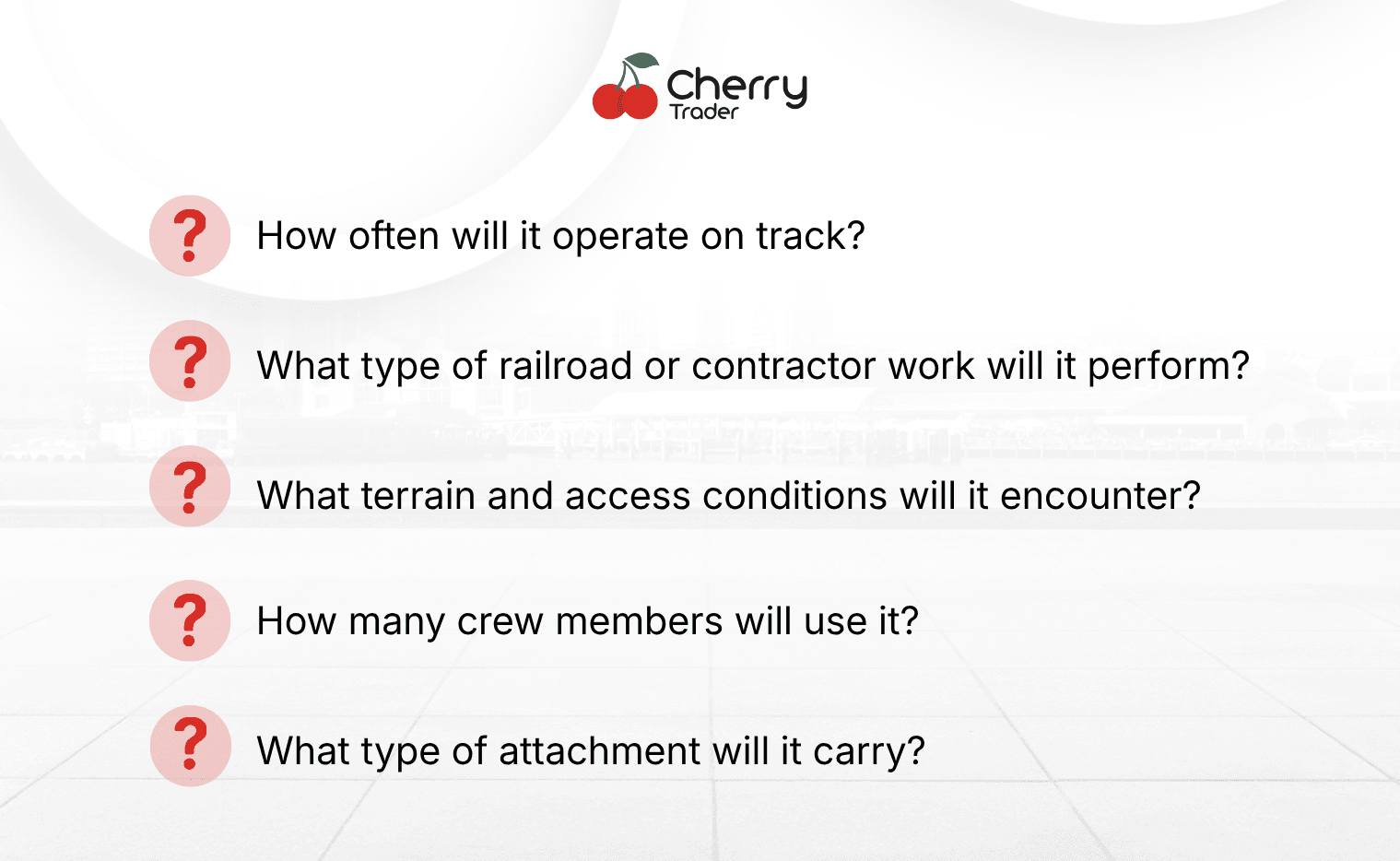
You should also determine whether the job requires specific clearance, axle loading, or configuration.
The railroad, employer, contractor, insurer, or project may have requirements that go beyond the vehicle manufacturer's specifications or federal minimums.
A mechanically sound unit can still be the wrong choice if its rail gear, payload capacity, chassis, or installed equipment does not match the assignment.
Start with the work and work backward to the specifications.
Check the Rail Gear Before You Evaluate the Deal
Start by reviewing the most recent hi-rail inspection record, the inspection date, and the next inspection due date.
Ask for maintenance and repair records as well as the rail-gear manufacturer and model information. If available, review the manufacturer specifications used for inspection measurements and any records of modifications or major repairs.
For U.S. operations, Federal Railroad Administration requirements state that hi-rail gear must be inspected for safety at least annually, with no more than 14 months between inspections. The inspection must include measurements of tram, wheel wear, and gauge, with adjustments as needed for safe operation. Employers must also retain inspection records until the next required inspection.
These federal requirements are minimum standards. A particular railroad, employer, manufacturer, insurer, or contract may impose additional requirements.
What Should You Look for on the Rail Equipment?
Check the rail wheels, mounting points, structural components, deployment mechanisms, hydraulics, hoses, fittings, controls, and securing mechanisms.
Look for visible signs of cracking, corrosion, damage, modifications, or previous repairs.
A visual inspection can catch obvious issues, but critical items such as wheel wear, gauge, and alignment may require measurements and qualified testing.
Can't inspect it in person? Use Cherry Trader's Video Tour feature to walk through the equipment remotely with the seller. See the rail equipment up close, ask questions, and get a better look before deciding whether the trip is worth it.
Check the Safety Equipment and Controls Before On-Track Use
Current FRA compliance guidance addresses required equipment on new hi-rail vehicles and states that the operator must check the vehicle for compliance before using it at the start of the work shift.
However, purchasing a vehicle that meets federal requirements does not automatically authorize its operation on every railroad or worksite. Railroad-specific, employer-specific, project-specific, training, insurance, and on-track safety requirements may also apply.
For operational safety procedures beyond the federal requirements, consult the applicable railroad, employer, qualified safety professional, or subject-matter expert.
Review the Documents Before You Rent or Buy
Before committing to a purchase, verify the vehicle identification and title or ownership documents, maintenance history, rail-gear manufacturer and model information, current inspection documentation, repair history, and any available installation or modification records.
When applicable, also review manufacturer manuals and documentation for cranes, buckets, bodies, or other auxiliary equipment.
Missing paperwork does not necessarily mean the vehicle is unusable, but treat it as a reason to investigate further rather than something to overlook.
Separate the information into two categories: what you must verify before committing and what is primarily useful for future maintenance.
That distinction can help you identify issues that could affect whether the vehicle is actually ready for the job.
Renting vs. Buying a Hi-Rail Truck: Which Makes More Sense?
There is no universal answer to whether renting or buying is the better financial decision. The right choice depends on how the equipment will be used and who will maintain the specialized systems.
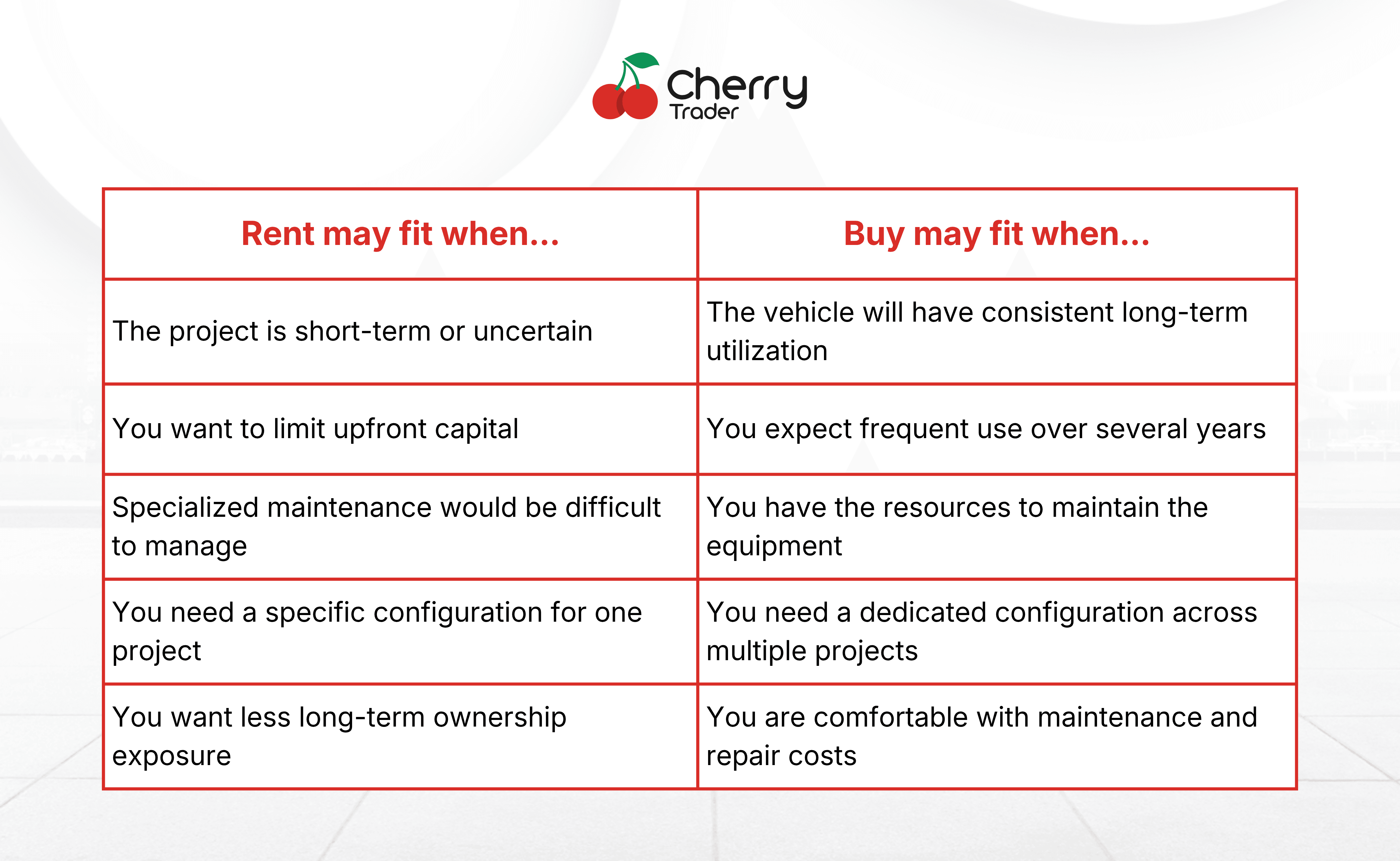
For a rental, clarify who is responsible for inspections, routine maintenance, repairs, damage, transportation, downtime, replacement equipment, insurance, and the vehicle's condition at the end of the rental period.
For a broader comparison of equipment acquisition options, see our guide to renting or leasing trucks and equipment.
Make the Right Hi-Rail Truck Decision
Once you have shortlisted several railroad trucks, compare them using the same criteria rather than starting with the lowest price.
Cherry Market Rate can also provide a useful market benchmark when the available valuation data includes sufficiently comparable equipment and configurations.
Next, browse available units, shortlist units that fit your job, review their records, contact the seller or rental provider, and arrange an appropriate inspection before committing.
A specialized vehicle deserves a specialized inspection. When you check safety, compliance, job fit, and documentation first, price becomes one part of the decision rather than the decision itself.

Get the Latest Blog Updates
Subscribe to receive new articles, guides, and industry insights from Cherry Trader directly in your inbox. Stay ahead with the latest trends and tips for buying, selling, and managing equipment.